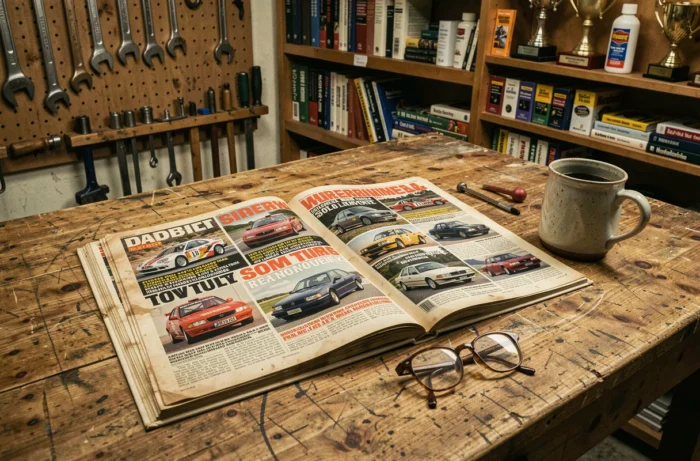
For more than a century, the French automotive press has produced thousands of pages devoted to road tests, motor shows and technical innovations. Long accessible only to collectors or specialist libraries, these archives are now making a comeback as online editorial content.
Several media outlets and platforms offer retro sections revisiting forgotten models, events and stories. This return to documentary sources comes at a time when the classic car market remains active and the digitization of press archives is opening up new research possibilities.
Digitized archives and the automotive press: how Gallica is changing retro research
The BnF’s digitization of its historical press collections through Gallica provides access to automotive newspapers and magazines in both image and text formats. This dual indexing makes it possible to search period articles directly by keyword.
In practice, an enthusiast can trace press coverage of a specific model (a Citroën Traction or a Renault 4CV) across the decades, comparing the language used, the selling points emphasized and the technical reservations expressed by journalists at the time. This is a notable difference from the retrospective accounts published today, which reconstruct history after the fact and often reflect a selection bias.
These documentary databases turn retrospective research into a keyword-driven investigation, going far beyond a simple illustrated historical account. Among the latest news from Retro’ Revue, we find the same focus on combining period documentation with a contemporary perspective on the models that have shaped automotive history.
Retro sections on online automotive media: formats and editorial limitations
Caradisiac, Automobile Magazine and AutomotivPress each have a section devoted to classic cars and automotive history. Formats vary: a model’s story, an anniversary of an iconic car, a look back at a period motor show or a road test of a classic vehicle.
Editorial coverage tends to fall into two categories. On one hand, nostalgic accounts celebrating a bygone era. On the other, technical analysis that places a model in its industrial context. The most-read articles generally combine both, with an emotional hook and a fact-based discussion.
What these sections cover well
- Anniversaries of iconic models (Lamborghini Miura, BMW M3, Citroën 2CV), with production figures and up-to-date collector values
- Retrospectives on motor shows (the Paris Motor Show in different eras), which make it possible to track the evolution of industrial trends over several decades
- Comparisons between period versions and modern reinterpretations, such as electrified 205 T16s or reimagined R5s
What is often missing
Comparisons with primary sources remain rare. Most retro articles draw on reference books or accounts collected after the fact, without citing press coverage published at the time. The gap between retrospective accounts and period coverage can be significant: a model that is now considered iconic may have received harsh criticism when it was launched.
Writers almost never explain which documentary sources they have used. Readers cannot tell whether an article is based on a road test published in 1972 or a book released forty years later.
Classic cars and low-emission zones: an angle missing from retro coverage
Retro sections devote plenty of attention to values, restoration and gatherings, but rarely address the regulatory restrictions affecting the everyday use of older vehicles. Low-emission zones (ZFE) are a case in point.
Service-Public explains that traffic rules in ZFEs depend on local orders, designated boundaries and vehicle categories. An older car does not automatically qualify for the same exemptions as a vehicle officially recognized as a collector’s vehicle. The distinction is based on the collector vehicle registration document, which is issued subject to age and compliance criteria.
This practical information varies from one area to another. A Porsche 911 owner driving in Paris does not face the same rules as an owner of the same model in Lyon or Strasbourg. Collector status does not guarantee unrestricted access to ZFEs, and any applicable exemptions must be checked on a case-by-case basis.
Print magazines and automotive nostalgia: the magazine returns as an object
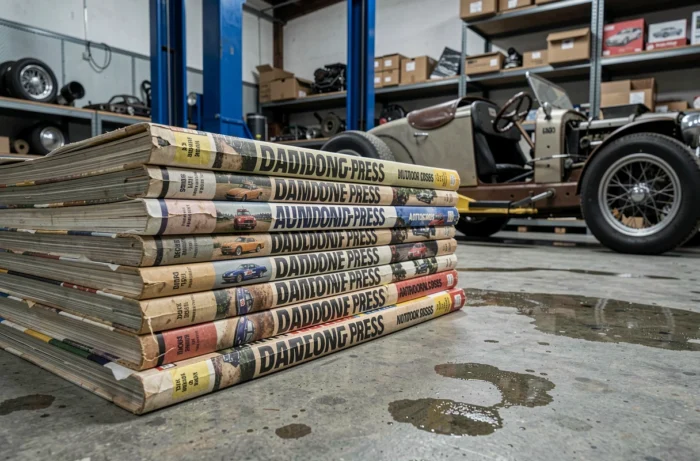
Digital content overload is restoring value to print, including in the automotive sector. Several specialist titles are betting on the printed object to stand out from the stream of online articles.
For the retro automotive press, this creates a paradoxical situation. Classic car magazines (Classic Auto, Rétroviseur) coexist with online sections covering the same topics, but under different constraints. Print allows for high-quality photographic portfolios and in-depth investigations. The web offers instant search, links to archives and updated valuations.
The two formats do not replace one another. An online article about the Audi 200 Turbo can link to a Gallica archive featuring the original road test. A print magazine can offer previously unpublished images from a private collection. The two formats complement each other, but editorial teams rarely make systematic use of this potential.
Readers passionate about automotive history therefore move between several layers of documentation: digitized archives, retro sections on general-interest websites, specialist print magazines and auction platforms that publish their own historical profiles. No single source covers the entire spectrum, making retro automotive research richer, but also more fragmented than ever.