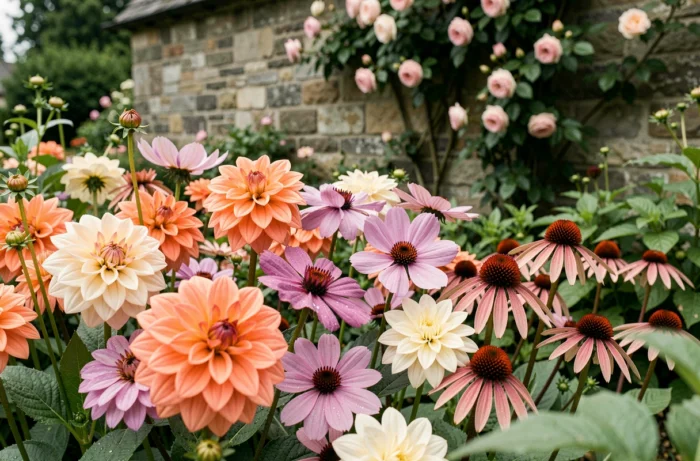
Soil pH, texture and organic matter content have a far greater impact on the success of a flower bed than the aesthetic choice of colours. Before planting garden flowers, a soil assessment helps you choose suitable varieties and avoid repeated failures with species that are unsuited to the existing soil.
Single flowers and pollinators: a technical selection criterion often overlooked
Research cited by the Royal Horticultural Society confirms something we see in flower beds: single flowers are far more accessible to pollinators than double-flowered cultivars. A single corolla exposes the stamens and nectar directly, whereas a double flower has more petals at the expense of its reproductive organs.
This factor can make all the difference when designing a functional garden. Single-flowered yarrow, coneflowers and gaura attract more beneficial insects than their heavily double-flowered horticultural counterparts. They also help improve cross-pollination in nearby vegetable gardens.
Among flowers such as the jack-in-the-pulpit, some native species play an overlooked role in local food webs. They need few soil amendments because they are adapted to the soils in their native range.
One point that is often underestimated: treating a flower bed with pesticides cancels out its benefits for pollinators. The scientific recommendation is clear: do not use chemical treatments in flower-filled outdoor spaces if your goal is to support biodiversity.
Long-flowering perennials: what product descriptions don’t tell you
A perennial described as flowering from June to October won’t produce a continuous carpet of colour for five months. The reality is more nuanced: flowering comes in waves, with pauses in between, and their duration depends on the climate, watering and removal of spent flowers.
A plant put in the ground in spring often spends its first season establishing roots rather than flowering. You may have to wait until the second year to see the true potential of a hardy geranium or rudbeckia.
Factors that affect flowering duration
- Regularly removing spent flower stems (deadheading) encourages most summer-flowering perennials, such as blanket flowers and sedums, to produce new buds.
- Soil that is too rich in nitrogen promotes foliage at the expense of flowers. Applying potash at the start of the season helps restore the balance.
- Actual exposure matters more than the label: a perennial labelled “full sun” will flower far less if planted in a spot that gets less than six hours of direct sunlight.
A common mistake is to judge a cultivar by its first year. A reliable verdict comes in the third season, once the root system is well established and the plant has adapted to local conditions.
Invasive exotic plants: European regulations and their impact in the garden
The European list of invasive alien species was expanded in 2025. Some ornamental plants that were sold without restrictions just a few years ago are now subject to bans on planting, sale or propagation.
An exotic plant is not automatically invasive. What matters is its regulatory status and its documented impact on local ecosystems. Before introducing an unfamiliar species to a flower bed, check whether it appears on the official list to avoid penalties and disputes with neighbours.
Ornamental species under scrutiny
Several climbing plants and ground covers prized for their vigorous growth appear on national or European lists. The rule of thumb: check the latest regulations before buying from a garden centre or online catalogue. Reputable nurseries are gradually removing these plants from their ranges, but existing stock is still being passed between private individuals.
The risk goes beyond a fine. If an invasive species spreads onto neighbouring land, the owner of the garden it came from may be held liable. Take particular care near waterways and wetlands.
Flowering ground covers: an alternative to lawns and the challenges of getting them established
Flowering ground covers are an appealing alternative to traditional lawns. Creeping thyme, lippia and dwarf yarrow reduce the need for mowing and add low-growing blooms. However, the claim that they require “no maintenance” is misleading.
Establishing them takes careful weeding and regular watering, especially during dry spells. Ground cover planted without preparing the site is quickly smothered by weeds. Allow at least two seasons for it to form a dense, self-sustaining cover.
- Soil preparation includes a stale seedbed or temporary mulch to deplete the surface weed seed bank.
- Planting density varies by species: plants spaced too far apart leave room for weeds, while those planted too close compete with one another and become weaker.
- In heavy clay soil, shallow drainage using coarse sand or fine gravel prevents winter waterlogging, which can destroy the roots of Mediterranean ground covers.
Autumn bulbs and planning a garden across multiple seasons
A year-round flower garden relies on overlapping growth cycles. Bulbs planted in autumn (tulips, daffodils, fritillaries and crocuses) provide spring blooms while summer-flowering perennials are still dormant.
The “lasagne planting” technique involves stacking several layers of bulbs at different depths in the same container or flower bed. The largest and latest-flowering bulbs go at the bottom, with the small, early-flowering bulbs near the surface. This layering produces blooms over several months without taking up more space.
The soil must drain well: a bulb left standing in water over winter will rot before it can sprout. In heavy soil, a layer of gravel beneath each layer of bulbs is enough to reduce this risk. Growing bulbs in pots with a free-draining potting mix is the most reliable option for clay soils.
When choosing varieties, it’s worth including botanical species rather than horticultural hybrids. Botanical tulips, for example, naturalise and flower again year after year, whereas Darwin hybrids lose vigour after two or three seasons.