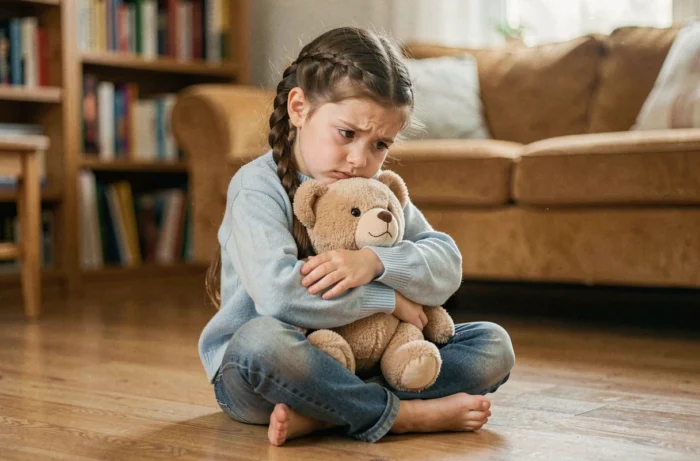
In France, child protection is based on a comprehensive legal framework built around the Convention on the Rights of the Child, the Civil Code and the Social Action and Families Code. In recent years, the number of measures has grown, with successive laws aimed at strengthening the safeguards available to minors.
However, a child’s vulnerability is not merely a legal issue: it stems first and foremost from their biological, psychological and social makeup, which places them in a state of structural dependence on adults.
Children’s biological and cognitive vulnerability: what development entails
By nature, a child is a developing organism. Their immune system, central nervous system and reasoning abilities have not yet fully matured. This immaturity is not a flaw: it is a normal part of human development. It does mean, however, that children do not have the same resources as adults to assess danger, resist pressure or escape an abusive situation.
Cognitively, the ability to anticipate the consequences of an action, distinguish a benevolent intention from manipulation, or put distress into words develops gradually. A three-year-old does not perceive risk in the same way as a teenager, and a teenager does not have an adult’s emotional maturity. This biological dependence means that any failure in a child’s environment can immediately put them in danger.
As the analysis of the Enfances et vulnérabilité programme, coordinated by Judit Vari and Alexandre Baguet, points out, a child is “ontologically vulnerable”—by definition, susceptible to harm and still developing. The approach outlined by Frencheo and the vulnerable child explores this structural dimension of childhood vulnerability in detail.
Compounding risk factors: when vulnerabilities add up
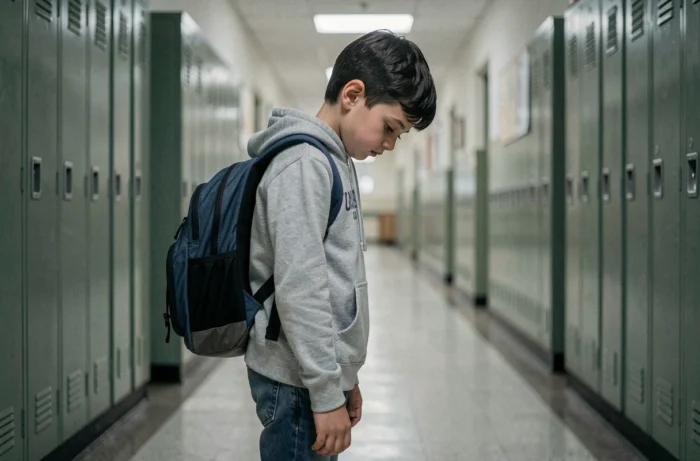
All children are vulnerable. Some are more so because their environment adds further layers of fragility to an already vulnerable state. Poverty is often cited, but it never acts alone. It combines with other factors which, together, create dangerous situations.
- The absence of consistent parental care—whether due to neglect, abandonment or repeated disruptions in a child’s care arrangements—deprives them of the attachment figure they need for their psychological development.
- Violence within the family, whether physical, psychological or sexual, affects a person who has neither the words nor the means to defend themselves or escape.
- Discrimination based on disability, gender or origin exposes some children to social isolation, further limiting their options for seeking help.
- In some countries, natural disasters and armed conflicts simultaneously destroy the home, access to healthcare and school—the three pillars of protection.
The cumulative effect of these factors creates exponential vulnerability, not merely an additive one. A child who is poor, abused and living in substandard housing is not facing three separate problems: they are facing an overall situation in which each vulnerability amplifies the others.
Stability in children’s care arrangements
For children in the care of child welfare services, a major concern is continuity in their care arrangements. A recent decree sets out the conditions for caring for children under three in nurseries, recognising the particular needs of very young children in care. The question remains whether there is a risk that the type of care will be chosen according to a general rule rather than the individual circumstances of each child.
A child in care who moves between foster families several times experiences repeated emotional disruptions. These disruptions undermine precisely what placement is meant to restore: a stable, secure environment.
Children’s online safety: a landscape that is still poorly mapped
Children’s vulnerability is no longer confined to the physical world. Exposure to screens and digital platforms creates risks that legislation is struggling to address fully.
UNICEF France identifies several specific threats: sexual content generated by artificial intelligence, cyberbullying, misinformation targeting minors and the exploitation of their personal data. Setting a minimum age for access is not enough if digital services are not designed with children’s safety built in from the outset.
This approach, known as “safety by design”, shifts responsibility. Rather than relying on families to filter and monitor content, it asks platform designers to make their products safer by default. The distinction matters: parents cannot constantly monitor all of their child’s online interactions, especially as the child grows older and becomes more independent.
Image rights and parental authority
Children’s image rights have recently evolved. Sharing photos or videos of a minor now explicitly requires a joint decision by both parents. This also applies to content posted by the family itself on social media, not just content shared by third parties.
The child’s growing involvement in this decision is also recognised: as they grow older, their views on sharing their image must be taken into account. This principle reflects a shift in how children are viewed: they are no longer merely objects of protection, but individuals with a voice of their own.
Strengthening protection: the measures still needed
A bill on child protection recently considered by the Senate addresses several areas: making certain offences no longer subject to a statute of limitations, checking the suitability of professionals who work with minors, and increasing resources for child welfare services.
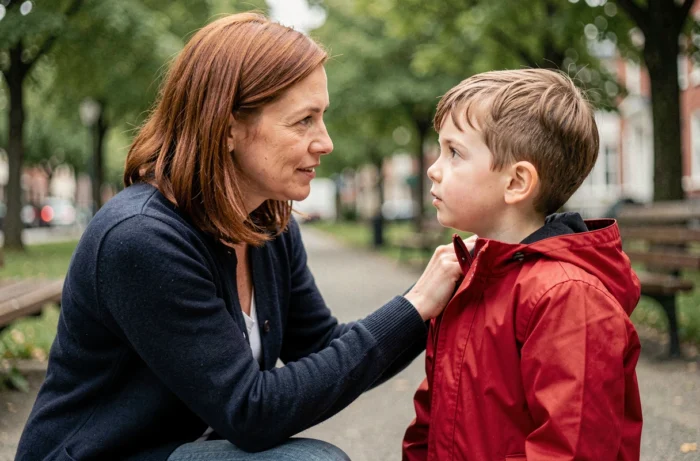
Beyond legislation, two measures remain underused. The first is training healthcare and education professionals to identify signs of abuse early. Teachers, general practitioners and childcare professionals are often the first to notice warning signs, provided they have been trained to recognise and report them.
The second measure concerns coordination between stakeholders. The National Observatory for Child Protection (ONPE) centralises data, but the flow of information between departmental services, the justice system, healthcare and education remains a documented point of friction. Protecting a child requires information to be shared among all the adults around them, without institutional silos.
A child’s vulnerability is a biological fact compounded by social, family and digital factors. Legal tools exist and are being strengthened. Their effectiveness depends less on how many there are than on how well they are coordinated and applied to each individual situation.