We all have that perfect pair of trousers in our wardrobe that we pull on every morning because we can wear them all day without feeling uncomfortable, and next to them, that jacket we bought on impulse but never wear because it pulls at the shoulders after an hour. The real starting point for a stylish, comfortable look is what you can wear all day—not what looks good on a hanger.
Try clothes in real-life conditions before making them wardrobe staples
A piece may feel comfortable in the fitting room but become a nuisance after three hours sitting at a desk or half a day of walking. Before making an item a wardrobe staple, wear it for a full day and go through your usual movements: sit down, bend over, raise your arms, and walk briskly.
This test quickly rules out cuts that are too tight around the hips, fabrics that cling to your skin as soon as you get warm, and collars that irritate the back of your neck. You can tell a reliable staple by how it wears, not how it feels when you try it on.
If you have to keep tugging at the waistband of a pair of trousers every twenty minutes, they’ll never be part of a comfortable outfit, even if they’re perfectly on trend. Identifying the pieces that live up to their promise early on saves time and keeps you from accumulating clothes that end up abandoned at the back of a drawer.
To compare cuts and fabrics across different brands, specialist guides such as fashion on Le Comparatif let you compare real-world feedback before making a purchase.
Build a wardrobe around comfortable fabrics and cuts that suit your everyday life
Clothing comfort comes down to two factors we often underestimate: the fabric against your skin and how the cut moves with you. A soft fibre that doesn’t breathe will become a problem by midday. A loose cut in a fabric that’s too heavy will weigh down your silhouette without giving you any real freedom of movement.

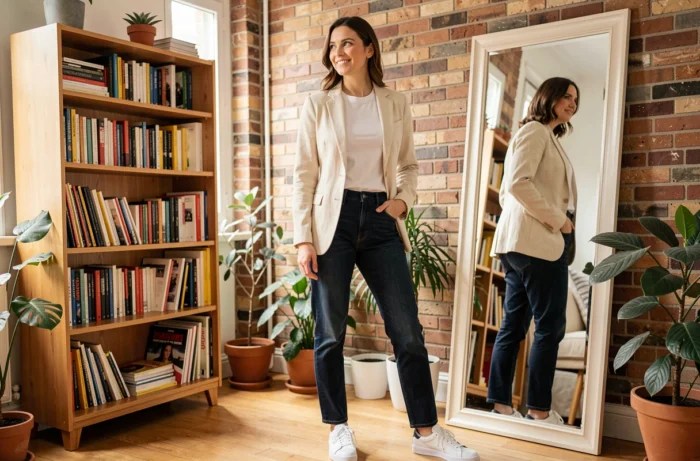
In practice, look for a balance between softness and structure. Slightly stretchy jeans that hold their shape after ten washes are a better choice than rigid jeans that “look good” in photos. An unlined blazer made from fluid fabric stays elegant without restricting your shoulders.
Everyday combinations that work follow a simple principle: pair a soft piece with a more structured one.
- Fluid trousers with an elasticated waist and a fitted ribbed-knit top create a clean silhouette without putting any pressure on your waist.
- Classic straight-leg jeans worn with an oversized, heavyweight cotton sweater create a relaxed look that lasts from morning to night.
- A straight jersey dress paired with a structured cropped jacket can take you from the office to an evening out without requiring a complete change of clothes.
A common mistake is to combine two shapeless pieces (joggers and an oversized sweatshirt) or two rigid pieces (a fitted shirt and tight tailored trousers). In the first case, you lose all definition. In the second, you lose comfort after an hour.
Express your personal style through colour and accessories
Personality in an outfit doesn’t come from accumulating lots of statement pieces. It takes shape through a few repeated choices that become your signature. Two or three recurring colours are enough to make a style recognisable.
Start with the shades you already wear naturally. If you feel good in navy and off-white, make them the foundation of your outfits and add just one accent colour (terracotta, forest green, or burgundy) that recurs in your accessories or in one item of clothing per outfit.
Accessories play a specific role here: they define your style without affecting the comfort of your base outfit. A watch, a distinctive bag, or a pair of earrings you wear often—these are the details that set a personal look apart from one that’s simply fine.
The trap is changing your accessories every day in the hope of varying your style. The opposite happens: your image becomes muddled, with no common thread. It’s better to choose a few accessories and wear them often so people associate them with your look.
Adapt your stylish outfits to the demands of a typical day
An outfit that works for someone who works from home won’t suit someone who spends the day travelling and attending appointments. Before looking to current trends for inspiration, identify the real demands of a typical week.
For a mostly sedentary day (at the office, in a coworking space, or at home), choose non-restrictive waistbands and fabrics that don’t crease easily. Fluid, pleated trousers look presentable on video calls while being just as comfortable as leggings.
For a busy day on the move (commuting, running errands, looking after children), prioritise flat shoes that support your feet and cuts that don’t ride up when you bend down. A stylish look loses all its appeal if you spend the day adjusting it.
Starting with your needs rather than a trend helps you avoid poor purchases. You buy fewer clothes, but you actually wear the ones you own. Style is built through consistency, not accumulation.
European regulations are also beginning to push in this direction. The Ecodesign Working Plan lists textiles among its priority sectors, with future requirements expected to focus on wear resistance and the repairability of clothing. Buying durable pieces that suit your lifestyle aligns both with a personal approach to style and with an ongoing regulatory shift.
A streamlined wardrobe of tried-and-tested, comfortable pieces that work well together delivers better results than a closet full of clothes you never wear. Comfort and personality aren’t compromises to be negotiated with trends—they’re the two criteria that make an outfit truly wearable every day.