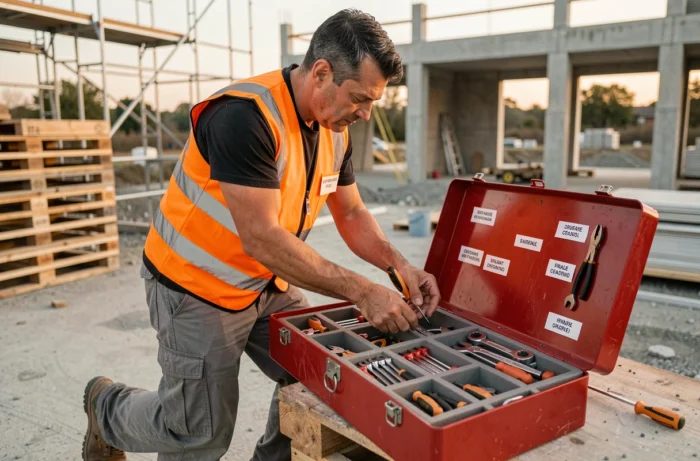
A structural work project wraps up on a Friday, and the crew is expected at another site first thing Monday. The truck is loaded in a rush, three extension leads are left in the plant room, and a drum of treatment product is abandoned beside the skip.
Two weeks later, the client reports waste that has not been removed, and the rental company charges for an extra week. When site demobilization is rushed, it costs far more than the time people think they save by leaving in a hurry.
Waste traceability: the detail most teams overlook during site demobilization
Emptying the skips is not enough to properly close out waste management. Regulations require a tracking form for hazardous waste handed over to a contractor, and waste streams must remain separated until the last truck leaves. It is common to see crews mix inert rubble with contaminated packaging in the same skip on the final day because they are short on time.
Before leaving the site, check three things: disposal records are in hand, temporary storage areas are empty, and no hazardous waste has been left without leak containment or protection from the weather. A site that looks clean is not necessarily compliant with regulations if the tracking forms are missing from the file.
Knowing how to demobilize a construction site smoothly comes down to this paperwork discipline, which is often pushed aside when crews are already focused on the next project.

Isolating equipment before dismantling it on site
The French Labour Code requires measures to prevent equipment from being accidentally restarted before any work is carried out while it is stopped. During site demobilization, this requirement applies to dismantling temporary fixed installations such as generators, compressors and site gantry cranes. Disconnect, isolate, then dismantle—in that order.
In practice, isolation involves three steps:
- Shut off and lock out the energy supply (electrical, pneumatic or hydraulic) with a personal padlock whose key is held only by the person carrying out the work.
- Release residual energy: a hydraulic cylinder may still descend under its own weight, and a capacitor may discharge after the power is switched off.
- Verify that no energy remains by testing (attempting a restart or measuring voltage) before starting dismantling.
Dismantling equipment without isolating it can lead to a serious accident and constitutes a breach that makes the company liable. When the schedule is tight, this is precisely the step people tend to skip.
Rented equipment and inter-trade loans: two sources of losses during demobilization
Rental charges continuing after the work has been handed over are a familiar problem. Rented equipment (cherry pickers, skips, props) should be listed separately, along with the contract end date and the rental company’s contact details. Ideally, arrange this two to three weeks before the project ends, not the day before leaving.
Every return of rented equipment should be documented with a signed return slip. Without this document, billing disputes are impossible to resolve. The return slip records the equipment’s condition, the date and the name of the person receiving it on behalf of the rental company.
Equipment loaned between contractors on site
Extension leads, stepladders and small tools pass from one trade contractor to another throughout the project. By the time demobilization begins, no one remembers who owns what. The solution is simple: record every loan (even in a paper notebook), including the borrower’s name and the date. Review these loans at the final site meeting before demobilization, not afterwards.
The time needed to collect everything varies depending on the project size and the number of contractors working together: a quick walk-through is enough for a small finishing package, whereas a site with around ten contractors requires a formal joint inventory.
Restoring the work area and inspecting the site before handover
Demobilization includes restoring the work area. This means more than just sweeping: the site must be returned to the condition specified in the contract. Temporary protections (tarpaulins, site guardrails and signage) are removed, openings are filled, and temporary utility connections are disconnected.
Photographing the site before and after demobilization provides evidence in the event of a dispute. A time-stamped photo record, even one taken on a phone, protects the company if the client reports damage after the crew has left. Include these photos with the handover report or the minutes from the final site inspection.
Site safety after the crew has left
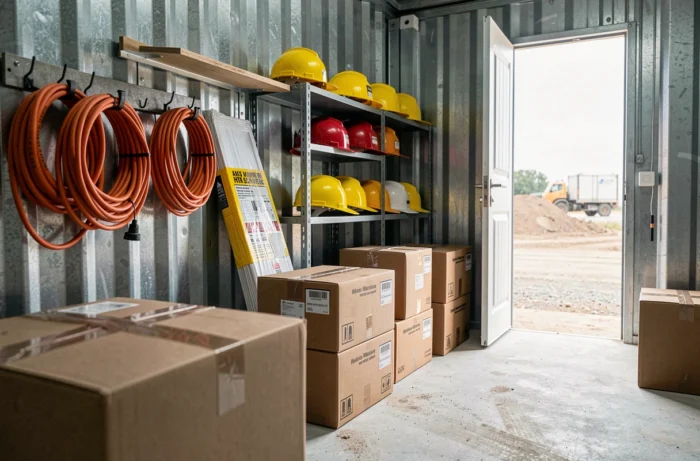
A partially demobilized site is still a construction site. As long as the perimeter fence remains in place or equipment is still on site, safety obligations continue to apply. Make sure access points are secured, safety lighting works if other contractors are still using the site, and worn-out PPE (cracked hard hats, expired harnesses) is taken out of service rather than thrown into the general waste skip.
Site demobilization is not a dramatic phase, but it is when oversights accumulated over months of work come to a head. Keeping an up-to-date equipment list from the start, consistently completing return slips and checking waste documentation turn this stage into a formality.
The true cost of a botched demobilization is not measured on the day the crew leaves, but in the weeks that follow, as rental invoices, client complaints and missing paperwork pile up.