Seasonal wardrobe updates are based on a misconception: accumulating trendy pieces doesn’t create a personal style. Expressing your style every day means understanding a few textile, color and structural principles that determine whether an outfit works long before you choose a pattern or a fashionable cut.
Fabric weight, drape and hand feel: what makes an outfit work
A garment that “hangs well” isn’t a matter of luck. A fabric’s hand—how it feels to the touch and moves with you—shapes your silhouette just as much as the cut. Heavyweight cotton twill gives trousers structure, while fabric that’s too thin can bag at the knees after an hour of sitting.
Before buying a piece, pinch the fabric between two fingers. If it immediately springs back into shape, it will hold up over time. A limp fabric that stays creased after pinching won’t wear well, whatever the brand.
For tops, jersey weight makes all the difference. A T-shirt made from sufficiently heavyweight jersey won’t cling to your body or lose its shape in the wash, and it can be tucked into high-waisted jeans without creating a bulky fold. Fabric quality matters more than a trendy cut. It’s the first thing to consider when building a lasting wardrobe.
If you like structured looks, choose lined pieces (blazers, dress trousers) that hold their shape all day. Casual outfits, meanwhile, work better in natural-fiber blends (cotton-linen, cotton-wool) than in pure synthetics.

Colors and contrast: build a personal style palette
Mainstream fashion advice often recommends investing in “neutral basics.” The problem is that black, white and beige don’t suit every skin tone. Beige that’s too yellow can wash out fair skin with cool undertones. Deep black can make some faces look harsher.
The most reliable approach is to identify your natural level of contrast—the difference between your hair, eye and skin colors. People with high contrast (dark hair, fair skin) naturally suit bold combinations such as navy and white or black and red. Those with low contrast tend to look best in tonal palettes, with variations in saturation rather than hue.
Several articles in Insider Infos’ fashion section explain how to adapt these color principles to seasonal trends without losing visual cohesion.
Choosing colors to suit your natural contrast helps you avoid impulse-buying mistakes. A trendy garment in a shade that doesn’t suit your palette will stay at the back of your closet, whatever its cut.
Follow the rule of no more than three colors per outfit
More than three distinct colors (excluding metallic accessories) can make an outfit harder to read. The rule works like this: one dominant color (about two-thirds of the visible outfit), one secondary color and one accent. The accent can be a piece of jewelry, a belt or a bag.
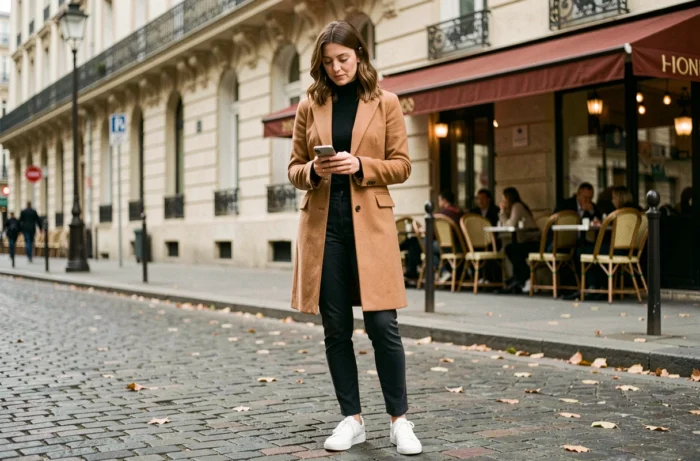
This season’s autumn colors, from terracotta to sage green, work well with this formula: a khaki or camel base, an ecru secondary piece, and a burgundy or copper accent.
Secondhand clothing and wear life: an underrated style advantage
Secondhand fashion has moved beyond its activist niche. In France, the recent growth in secondhand clothing sales has been driven more by brick-and-mortar thrift stores and dedicated sections in major retailers than by peer-to-peer platforms.
Buying secondhand doesn’t guarantee a lower price than buying new. Some sought-after designer pieces resell for close to—or even more than—their original price. Comparing options, both in-store and online, is still worth doing.
The style appeal of secondhand shopping lies elsewhere: it gives you access to cuts, fabrics and patterns that aren’t found in current collections. A 1990s virgin-wool blazer, a 2000s silk crepe dress or raw Japanese denim naturally faded with wear—these pieces add a distinctive touch that’s impossible to replicate by buying only new clothes.
Care and alterations: make your standout pieces last longer
Expressing your style also means taking care of the clothes you already own. A few practical steps can change how your wardrobe looks and feels:
- Having trousers or a dress altered to adjust the length or take in the waist can turn an ordinary piece into a custom-fit one, at a modest cost
- Washing natural fibers at a low temperature and drying them flat preserves the fabric’s hand and prevents shrinkage that can throw off proportions
- Store knitwear folded (never on a hanger) to prevent shoulder stretching that can make it look neglected
A garment tailored to your body looks better than a new one that fits poorly. Spending on alterations is often a better investment than replacing clothes.

Accessories and jewelry: make an impact without overloading your look
Accessories act as signal amplifiers. A statement necklace with an outfit that’s already busy with patterns creates visual noise. The same necklace becomes the focal point when worn with a plain crew neck.
A practical rule: wear just one statement accessory per outfit. If you’re wearing oversized earrings, keep your necklace subtle or skip it altogether. If your belt is wide and textured, keep your jewelry minimal.
- Gold jewelry warms up palettes with warm undertones (terracotta, camel, khaki)
- Silver or rhodium-plated jewelry pairs better with cool undertones (navy, gray, burgundy)
- Mixing gold and silver works as long as you keep them to one area (your wrist or neck, not both)
Current trends favor mid-length chains and stacked rings. Their advantage is that they pair easily with workwear and relaxed weekend outfits, without requiring a complete change of accessories.
Everyday style isn’t built by accumulating trendy pieces, but by mastering a few practical details: fabric quality, color harmony, the right balance of accessories and care for the clothes you already own. Five perfectly fitted garments are better than fifteen bought on a seasonal impulse.